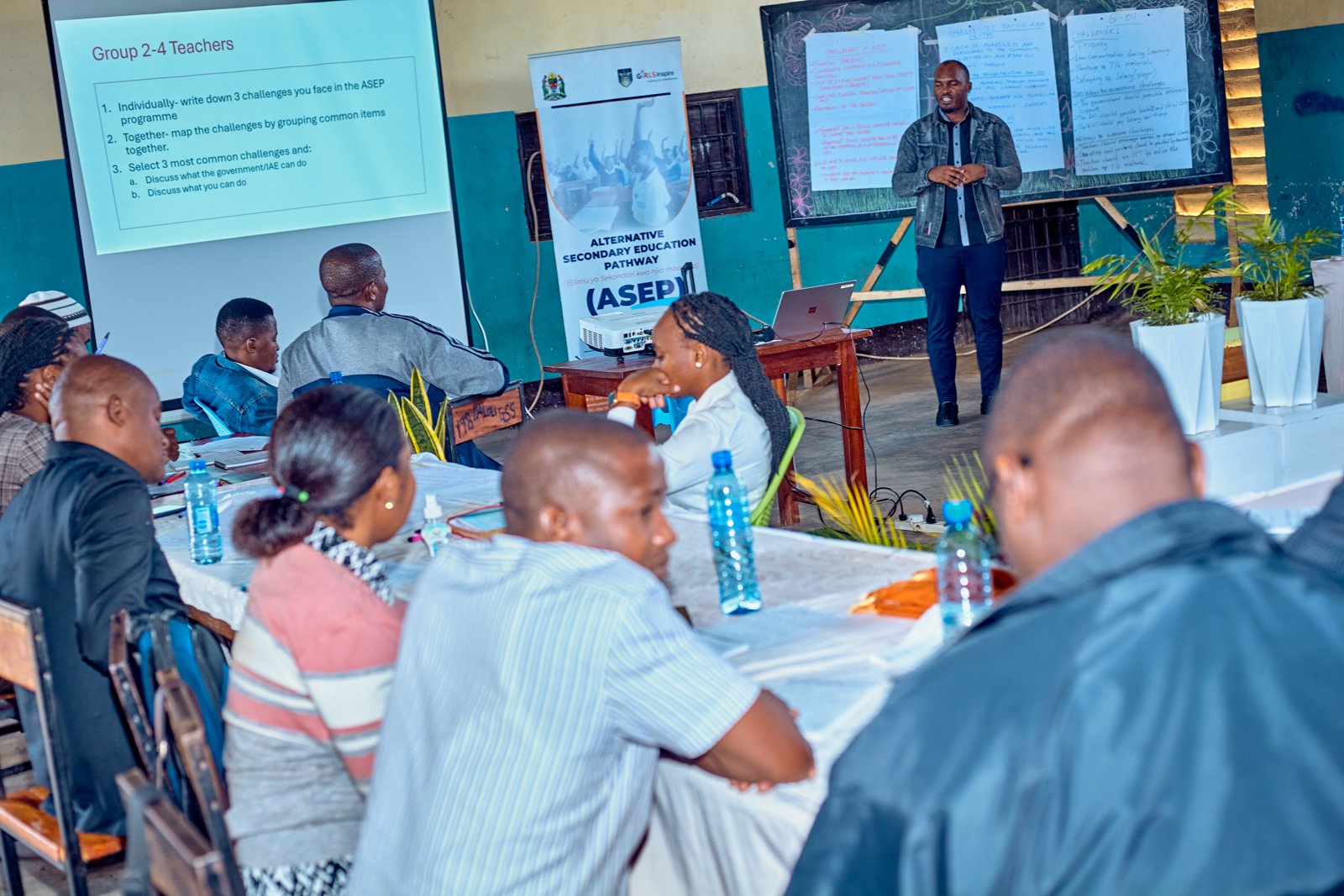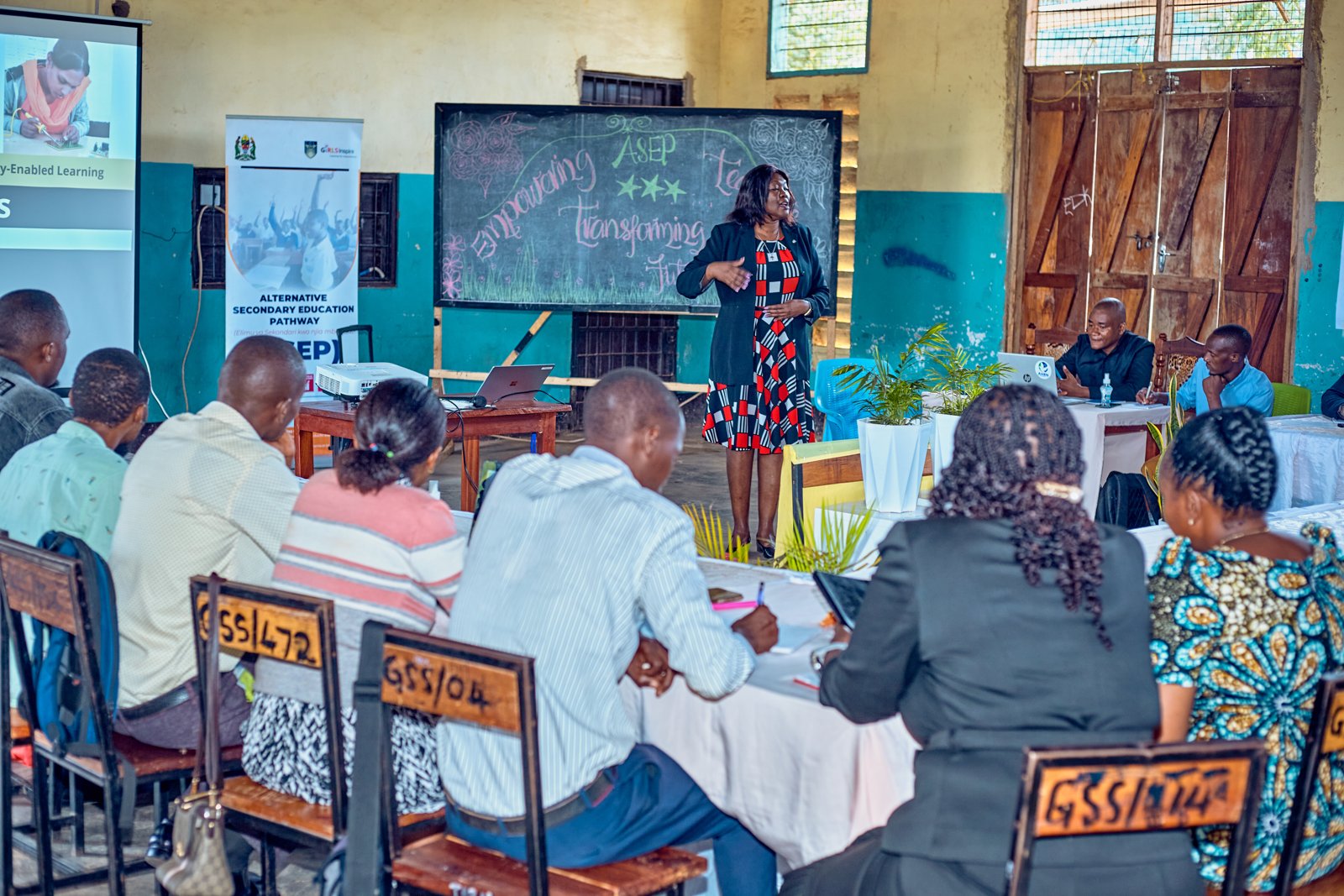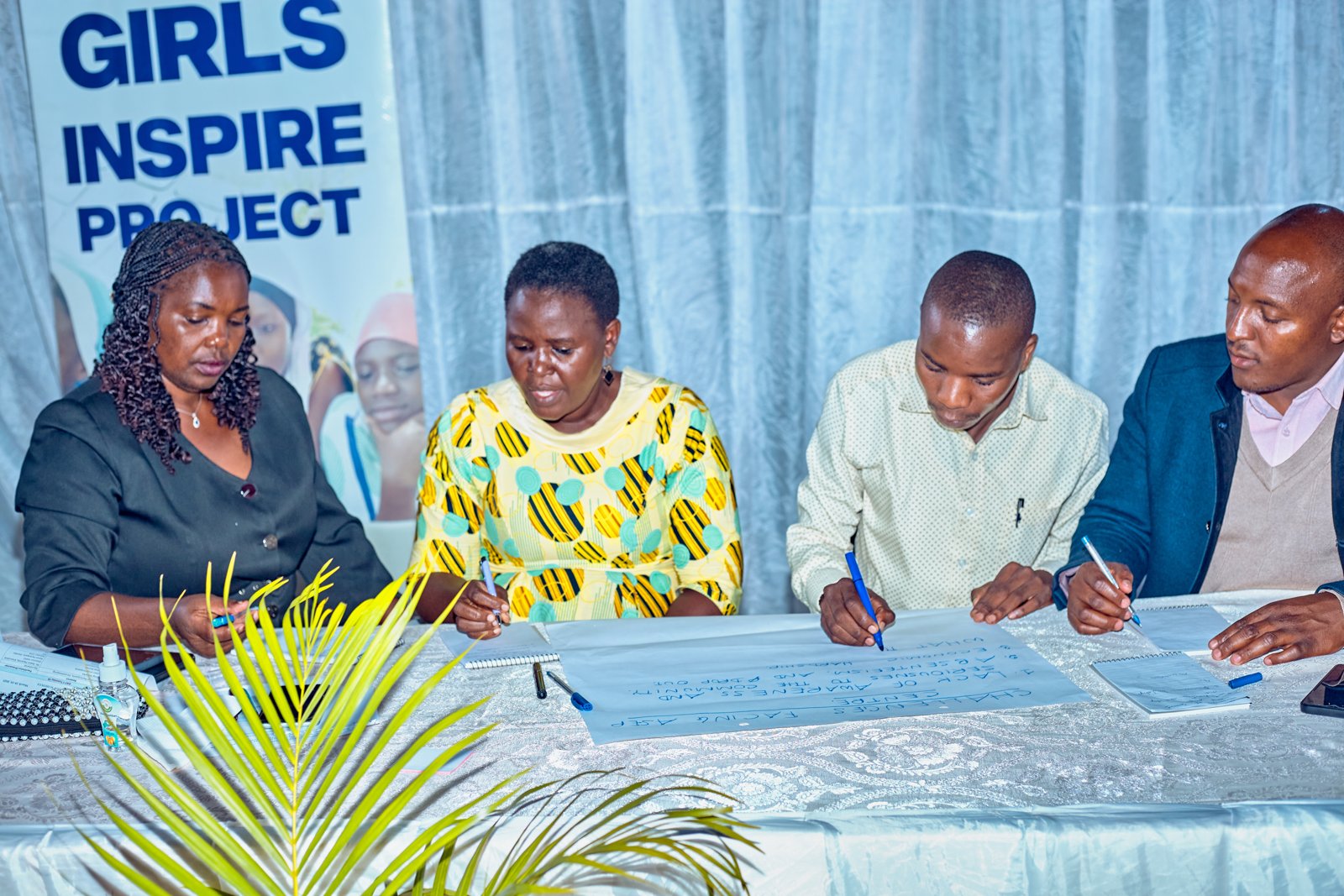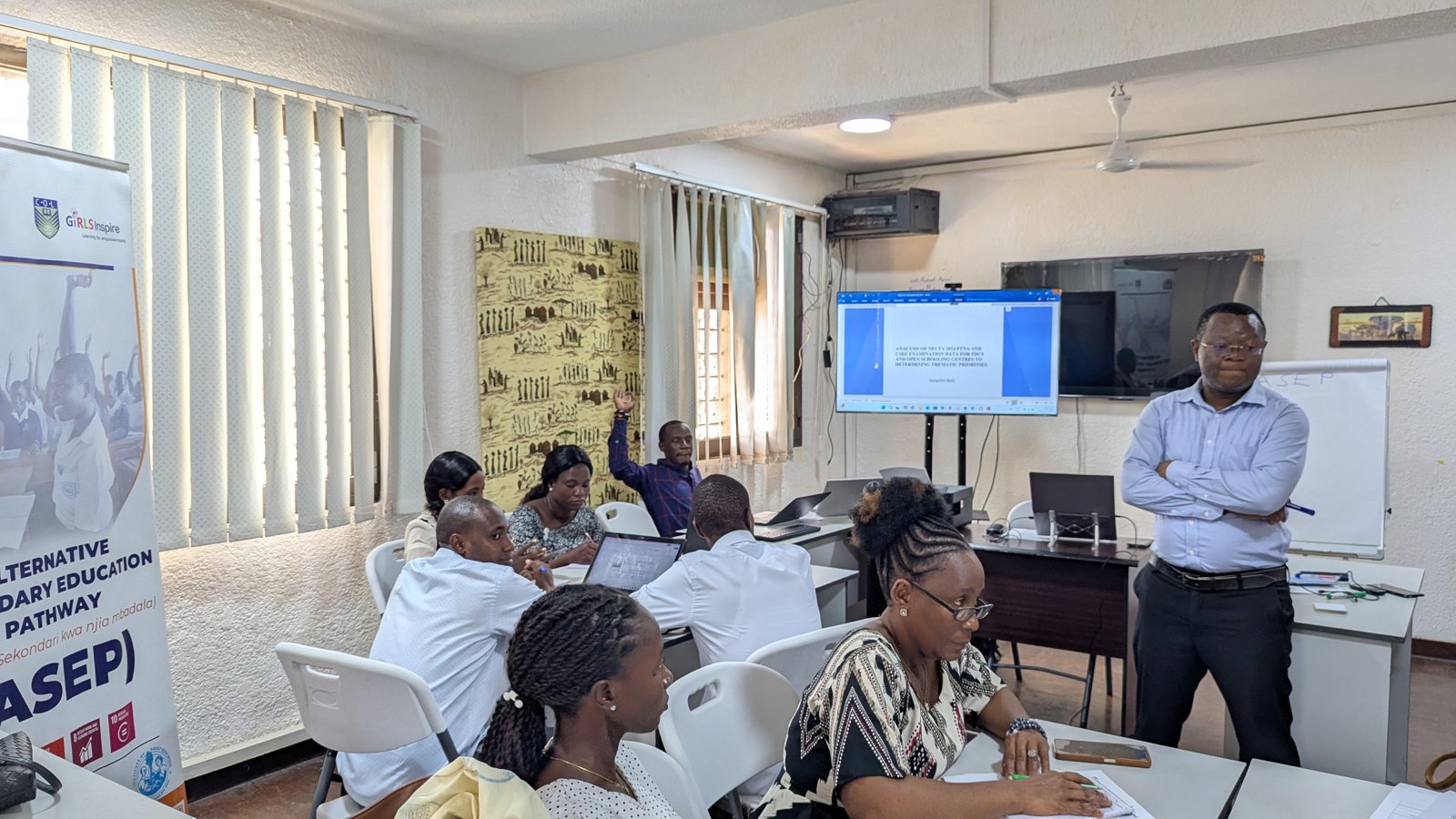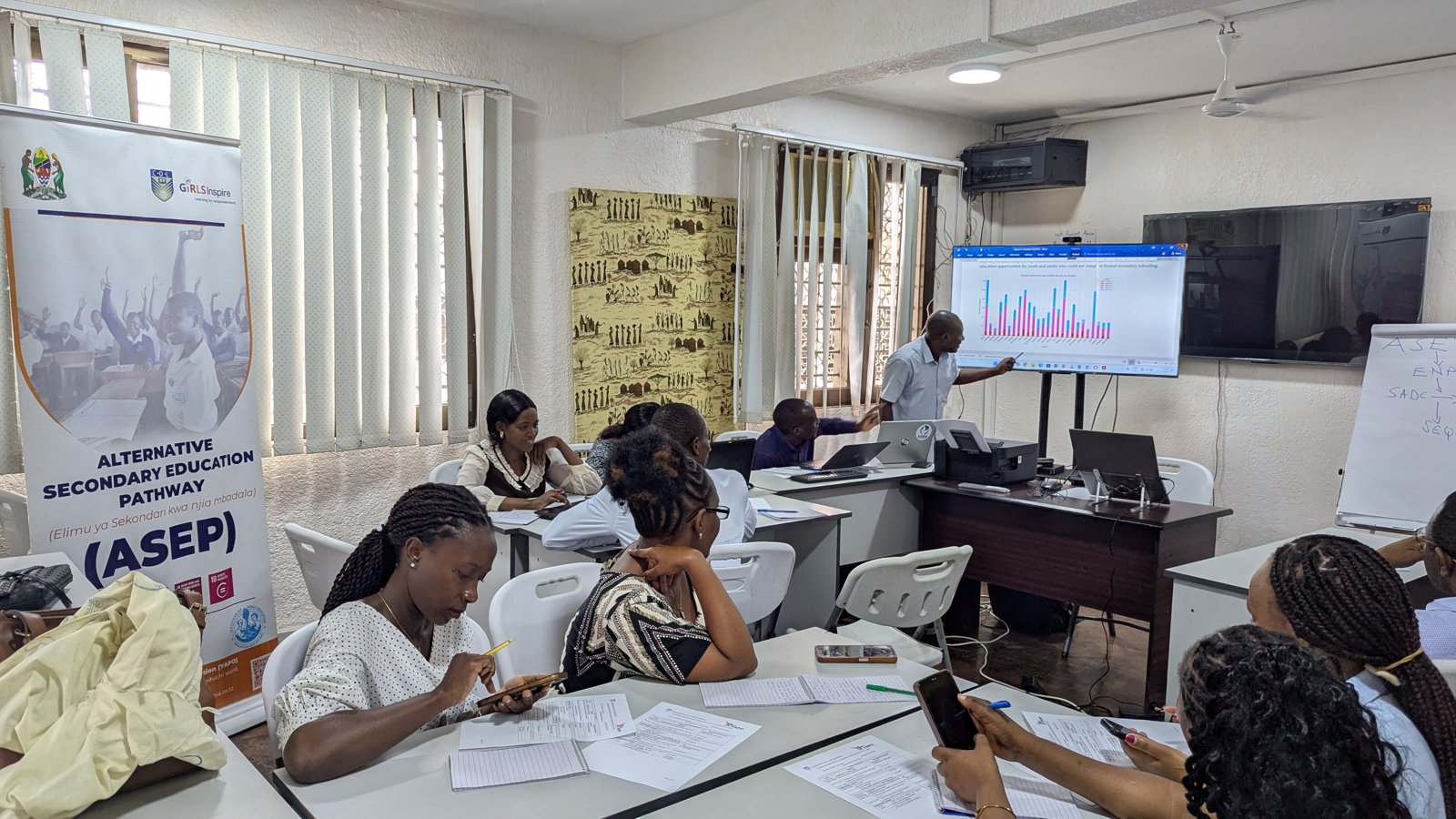
When Mr. Dickson took the floor at the ASEP teachers' workshop to present students' results, he did not simply read out marks. He traced the performance of ASEP learners from district level, through regional comparisons, to national benchmarks — and in doing so told the story of thirteen teenage mothers who passed national examinations against considerable odds.
The presentation showed how ASEP learners are performing across NFTA and CSEE, setting school results against the trends of their districts and regions and against national averages. For many teachers in the room, it was the first time they had seen their own students' progress placed in that wider picture.
Behind Every Mark Sheet
Behind each result is a young mother who wakes before dawn to prepare a child for the day before preparing herself for class — supported by the pathway's childcare solutions, psychosocial support and entrepreneurship activities that keep her household running while she studies.
In the discussion that followed the presentation, one teacher from the ASEP network reflected on what the comparison meant for her school:
Nilipoona matokeo ya wanafunzi wetu yakilinganishwa na wastani wa taifa, nilijua kwamba kazi yetu inawezekana kabisa.
"When I saw our students' results compared with the national average, I knew that our work is truly possible."
What the Trends Reveal
The trends told a consistent story: where schools combined strong subject teaching with the full ASEP support package, results climbed steadily from district to national level. Where support was thinner, performance was more fragile — a finding teachers took as a clear call to strengthen the model, not the learners.
Building on the data, participants committed to monitoring every ASEP learner's progress term by term, and to using the next national examination cycle as the next honest test of the pathway. For the thirteen young mothers already across the line, the message from the workshop was simple: they are the proof, not the exception.